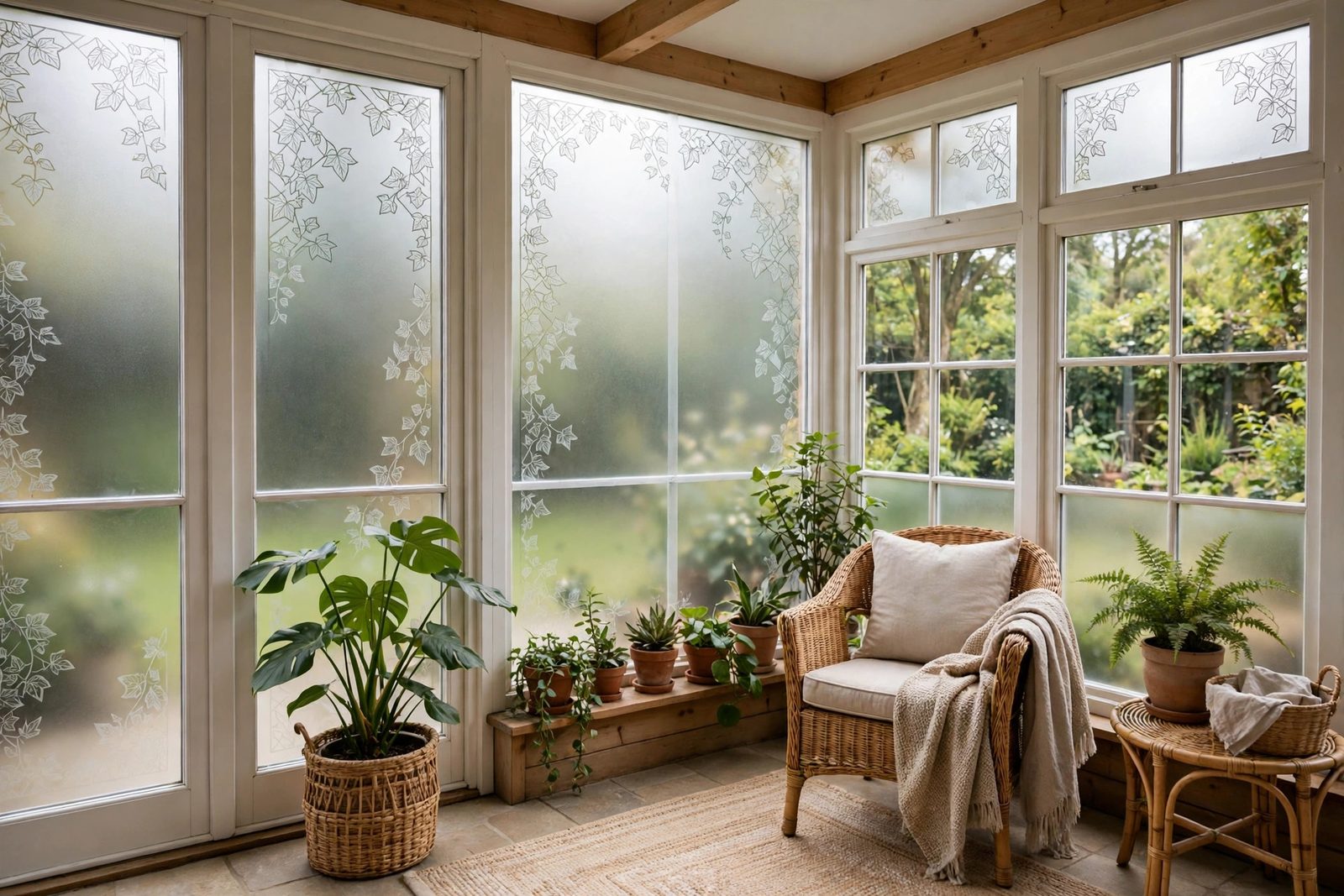
If you are asking why does my home window tint have bubbles after installation, the likely answer is reassuring: home film goes on wet, and the moisture pockets you see are the cure still working. Home panes are large, and full curing can take up to 30 days.
The skill is telling cure bubbles from failure bubbles — they look similar in week one and mean opposite things by week five. This guide gives you the timeline, the causes, and the hands-off rules. Our home window tinting page covers aftercare for new installs.
Why does my home window tint have bubbles after installation?
Installation uses a slip solution so film can be positioned on big panes. The squeegee removes most of it; the rest must evaporate through the film itself. Until it does, it collects in small pockets and a general milkiness — the signature look of a curing window.
Snellville conditions stretch that exit: humidity slows evaporation, air-conditioned interiors keep glass cool, and large sunroom panes hold more solution than small ones. A bubble map that looks alarming on day four can be a memory by day twenty.
What matters is trajectory. Cure bubbles shrink, soften, and migrate slightly toward edges as they dry. Failure bubbles are static, grow new companions, or contain visible grit. Watch the trend, not the snapshot.
The most common causes of window tint bubbles in Snellville
Bubbles trace to six recurring causes — most are about the film and its bond, one is about the glass itself, and one is simply the cure still running. Here is how each one presents, so you can name yours:
Cure water pockets — the normal ones
Small, soft, watery-looking blisters and hazy patches in the first weeks. They flatten as moisture leaves. This is the cause behind the overwhelming majority of “bubble” calls, and the cure is patience plus sunlight.
Dust and contamination trapped at install
A speck of dust or grit under the film tents it into a tiny, permanent bubble with a visible center. These never cure away because the object is still there. Prevention — clean rooms, tack-off discipline — is the only cure, which is why installer environment matters.
Adhesive failure with age or heat
On older film, adhesive lets go in patches, forming dry, crinkly bubbles that grow over months. West-facing Snellville glass accelerates it. This is end-of-life behavior, and the fix is replacement, not pressing.
Delamination — the film splitting internally
Multi-layer films can separate between layers, producing wavy, distorted patches that no surface work touches. It reads as bubbling but is structural failure — again, a warranty replacement conversation.
Wrong film for the glass
Incompatible film on dual-pane or coated glass can stress seals and misbehave as temperatures swing. Bubbling that arrives with fogging between panes points at the window unit itself — a different trade and an urgent call.
Edge bubbles from seals and frames
Bubbles clustered at edges often trace to silicone, old caulk, or frame contact contaminating the bond line. They appear early, stay local, and are an install-quality item your installer should inspect.
Are window tint bubbles normal in Snellville GA?
In the first 30 days: usually, yes. The pattern to expect is many small pockets and haze that visibly improve week to week, with edges and the bottom of large panes clearing last.
The normal-cure checklist:
- Appeared in the first days after installation
- Soft and watery in appearance, shrinking over time
- No gritty speck visible at the center
Anything outside that pattern — growth after week two, dry crinkle, fog between panes — graduates from “watch it” to “call us.” The same cure logic governs car film in our cure-time guide.
How to fix window tint bubbles in Snellville GA
Four situations, four honest answers:
Cure bubbles: wait, with sunlight
Give the film sun and time. Open blinds on bubbled panes during the day; warmth is the accelerant. Do not press, pin, or squeegee them yourself — you cannot push water through film faster than evaporation, but you can crease it trying.
A few true air bubbles on cured film: a pro visit
Installers can sometimes work a small, clean air bubble to the edge with heat and technique. It is a five-minute job with the right tools and a permanent scar with the wrong ones — which is why it is a warranty visit, not a DIY video.
Contamination bubbles: replacement of that pane
The speck cannot leave, so the film must. On a warrantied install this is a no-drama replacement: measure, re-cut, re-install that pane.
Adhesive failure or delamination: full replacement
When the bond or the film itself has failed, patches fail next. Replacing the affected panes with fresh, compatibility-checked film — the checks in our homeowner hiring guide — is the durable fix.
Common mistakes that make bubbling worse
Almost every bubble horror story includes one of these:
- Poking bubbles with a pin — converts water pockets into permanent holes
- Pressing with cards or squeegees mid-cure — creases the film
- Applying a hair dryer or heat gun — blisters curing film unevenly
- Cleaning filmed glass in week one — works moisture back under edges
- Judging the job on day three and demanding a redo of a normal cure
Photograph instead of touching: a dated photo series shows the trend clearly and is exactly what your installer wants to see if you do call.
When to call a professional for bubbling tint repair
Call at 30 days without improvement, immediately for lifting edges or inter-pane fogging, and any time bubbles multiply fast. Bring the install date and your photos; diagnosis is mostly timeline plus a close look.
At O2 Window Tinting, 3304 Stone Mountain Hwy, Snellville, bubble inspections on our installs are free and honest — most end with “give it ten more days,” and we would rather say that in person than have you poke a curing pane.
Open Monday–Friday 9 AM–6 PM, Saturday 9 AM–5 PM, closed Sunday. Call (770) 674-2766 and describe what the bubbles are doing — shrinking, static, or growing tells us most of the story.
Frequently Asked Questions
Why does home window tint bubble in Snellville GA?
Usually because it is still curing: home film is installed wet, and trapped mounting moisture forms pockets and haze that evaporate through the film over up to 30 days. Bubbles that appear later, grow, or feel dry and gritty point instead to contamination, adhesive failure, or delamination.
Will window tint bubbles go away on their own?
Cure bubbles, yes — they shrink and vanish as moisture leaves, edges and low spots last. Bubbles caused by trapped dust never leave (the speck is still there), and adhesive-failure bubbles grow. The 30-day rule separates them: improving is curing; static or worsening after a month is a defect.
How do you fix window tint bubbles?
You mostly do not — you wait out the cure, which fixes the majority. True air or contamination bubbles on cured film sometimes respond to a professional's heat-and-press work, but the honest fix for adhesive failure or delamination is replacing that pane's film under warranty.
Is bubbling home window tint covered by warranty?
Bubbling from film or adhesive failure is a core warranty item on quality film — a lifetime warranty on film should cover it in plain terms. Keep your install paperwork; the installer inspects, confirms the cause, and replaces defective panes. Damage from cleaning abuse is the usual exclusion.
How long should I wait before calling about bubbles?
Note the date and watch the trend for the first month. Call sooner if edges lift, bubbles multiply rapidly, or you see gritty specks inside the bubbles. After 30 days with no improvement, call — that is no longer a cure, and your installer should see it.
Get help with window tinting in Snellville
Start with home window tinting and residential window tinting, or call O2 Window Tinting at (770) 674-2766 — if your film is ours, the inspection and any warranty replacement are on us.