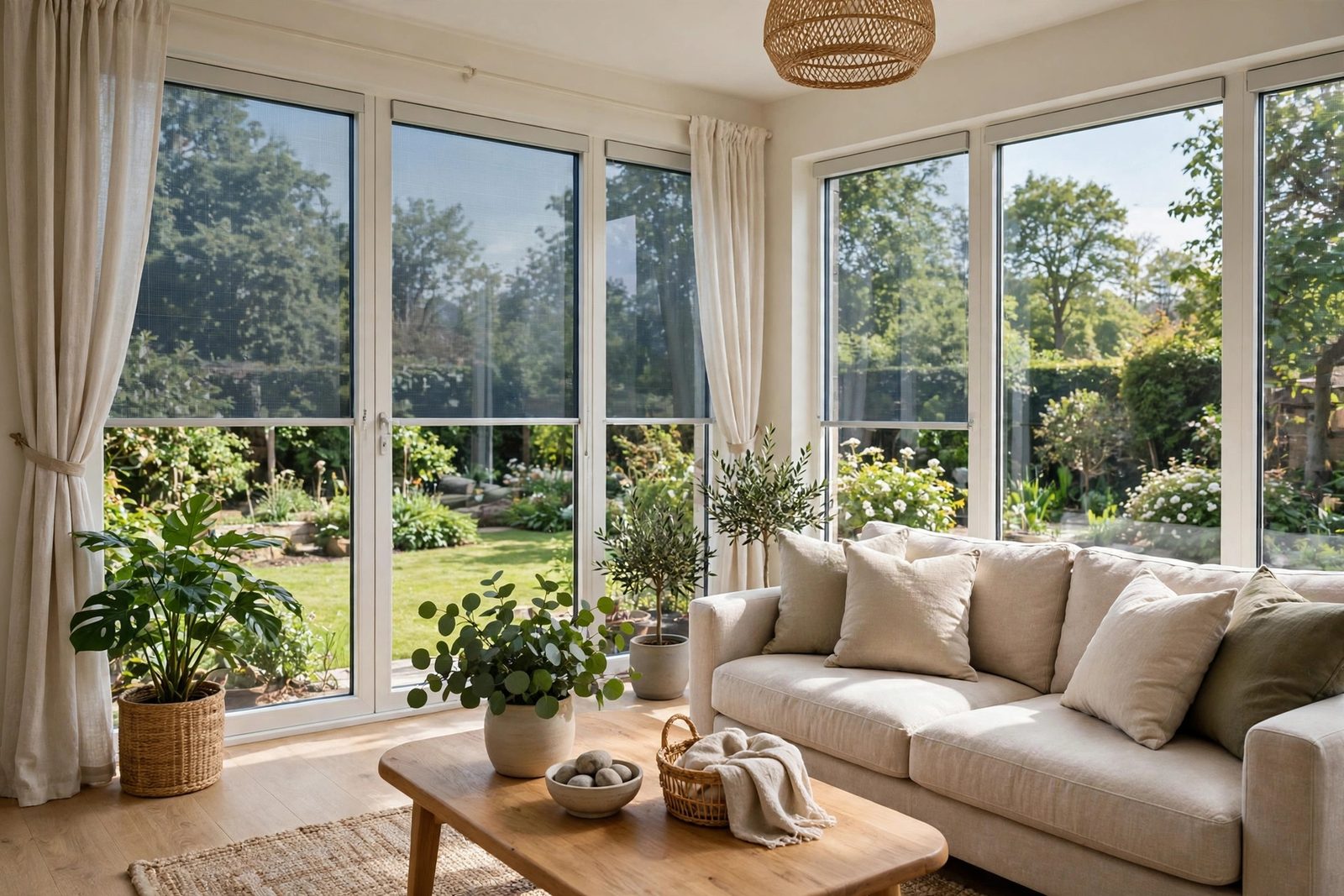
The best window tint for Snellville homes facing afternoon sun is a ceramic solar film chosen for heat rejection, not darkness. West-facing glass takes low, direct sun from about 2 PM until sunset — exactly when the house is already heat-soaked and the AC is working hardest.
This guide covers why west rooms suffer most, which films fix it without a mirrored exterior, what it costs per square foot in October 2026 guide ranges, and the HOA and glass checks to run first. Our service details live on home window tinting.
Why Snellville's afternoon sun hits west-facing windows so hard
Morning sun arrives when the house is cool and the air is mild. Afternoon sun arrives at peak temperature, at a low angle that slips under eaves and blinds, and it lands for hours on the same rooms.
Snellville’s housing stock makes it worse: two-story family rooms with tall west glass, sunrooms, and newer subdivisions with young trees give that sun a clear run. Older, tree-covered streets fare better — canopy is a genuine variable, and we ask about it.
The result is the familiar pattern: a thermostat set to 72, a west room at 80, and an AC that never cycles off. Film attacks the cause — solar gain at the glass — instead of the symptom.
What is the best window tint for afternoon sun in Snellville GA?
Ceramic solar film, in a moderate shade. It targets infrared — the heat you feel — so rooms cool down without going dark, and its low exterior reflectance keeps the house looking like a house.
How the main film types stack up on west glass:
- Standard solar film ($5–$8/sq ft): solid glare and heat cuts on a budget
- Ceramic film ($7–$12/sq ft): the west-facing recommendation — high TSER, low reflectance
- Spectrally selective film ($10–$15/sq ft): maximum heat rejection with the lightest look
- Dark privacy film: strong shade, but rooms go dim and exteriors can look heavy
- Mirrored film: effective, and the classic HOA complaint — we do not install it on homes
Shade choice matters less than rejection: a lighter ceramic routinely outperforms a darker standard film on west glass, the same TSER lesson as car tint.
For whole-house planning — glass types, warranties, and what to verify before signing — read what to check before hiring a home tinting pro.
Which window tint is best for west facing windows in Snellville?
The highest-TSER film your glass construction and HOA allow. Dual-pane and Low-E glass need compatibility-checked film; the wrong film on the wrong pane raises thermal-stress risk, which is why we spec per window, not per house.
Two-story west glass is the priority zone: heat admitted at height warms the whole upper floor and migrates down the stairwell all evening.
Two things matter more than any product name:
- TSER on the spec sheet — the heat figure you can compare across films
- Exterior reflectance — low numbers keep HOAs and neighbors calm
Our residential window tinting page walks through the spec-sheet numbers we quote from, so you can compare any installer’s film on equal terms.
What about the front of the house?
East-facing glass takes gentler morning sun and usually needs only light glare control, if anything. Spend the film budget west and south; the front of most Snellville homes is a curb-appeal question, not a heat emergency.
How much does home window tint cost near me in Snellville GA?
October 2026 guide pricing is per square foot of glass, installed:
The ranges we quote from:
- Standard solar film: $5–$8 per sq ft
- Ceramic film: $7–$12 per sq ft
- Premium spectrally selective: $10–$15 per sq ft
- Most west-facing rooms: priced by measured glass area, quoted in writing
Two variables move the number: total glass area and access — second-story and sunroom glass takes longer than ground-floor rectangles. Film tier is the third, and the smallest.
A typical install runs one visit: measure and quote first, then install room by room so the house stays livable. Whole-home figures are on our pricing page.
Can window tint reduce AC costs in Snellville Georgia?
Yes — by rejecting solar heat before it enters, film shortens AC runtime precisely during the expensive late-afternoon hours. The comfort change is immediate; the bill change follows the sunniest glass you treated.
The U.S. Department of Energy notes that heat gain and loss through windows accounts for roughly 25–30% of residential heating and cooling energy use. West glass is the worst offender in that share, which is why one treated room can change how the whole system feels.
Film also protects what the sun was quietly billing you for: hardwood color, upholstery, and artwork near west windows fade from UV exposure that quality film cuts by about 99%.
Set expectations honestly: film will not fix undersized AC, failed ductwork, or missing insulation. It removes the solar load pouring through glass — often the load that made the system look undersized.
Common mistakes we see on Snellville tint jobs
The expensive mistake is buying the darkest film for a heat problem. Darkness is visible light; heat is infrared. Homeowners end up with dim rooms that still run warm.
Other mistakes we fix regularly:
- Skipping the glass check — incompatible film on dual-pane glass risks seal stress
- Ignoring the HOA until after install — reflectance is the objection; check covenants first
- Tinting every window identically — west glass needs the premium film; north glass may need none
- Judging by a hand sample indoors — evaluate TSER and reflectance figures, not showroom light
- Hiring on price per house — quotes should be per square foot, by film, in writing
If existing film has already failed, bubbles are the usual first sign — our post on home tint bubbles after installation separates cure bubbles from real failure.
When to call a professional
Call when a west room runs noticeably hotter than the rest of the house, when fading lines appear on floors, or when the HOA question needs a spec sheet rather than an opinion.
At O2 Window Tinting, 3304 Stone Mountain Hwy, Snellville, we measure your glass, verify compatibility, and quote per square foot in writing. We serve Snellville homes from Brookwood to the Highway 78 corridor.
Open Monday–Friday 9 AM–6 PM, Saturday 9 AM–5 PM, closed Sunday. Call (770) 674-2766 to schedule a home measurement visit.
Frequently Asked Questions
What is the best window tint for afternoon sun in Snellville GA?
A ceramic solar film in a moderate shade. It rejects infrared heat without a mirrored look, keeps rooms bright, and suits HOA-sensitive exteriors. October 2026 guide pricing runs $7–$12 per square foot for ceramic, with premium spectrally selective films at $10–$15.
Which window tint is best for west-facing windows?
The film with the highest TSER your glass and HOA allow. West glass takes low-angle sun for hours, so heat rejection matters more than darkness. Many Snellville homes pair ceramic film on west rooms with lighter film elsewhere to balance light.
How much does home window tint cost in Snellville GA?
Guide ranges per square foot installed: standard solar film $5–$8, ceramic $7–$12, premium spectrally selective $10–$15. A typical west-facing family room lands by its glass area — we measure and quote the exact figure in writing before installing.
Can window tint reduce AC costs in Snellville Georgia?
Yes, by cutting solar heat gain at the glass so the AC runs less on sunny afternoons. The U.S. Department of Energy notes heat gain and loss through windows accounts for roughly 25–30% of residential heating and cooling energy use, which is why west glass is the highest-value place to start.
Will home window film upset my HOA?
Low-reflectance ceramic and spectrally selective films are designed to avoid the mirrored look HOAs object to, and from the street many are nearly invisible. Check your covenants first — we supply film spec sheets for HOA letters and never install reflective film on homes.
Get help with window tinting in Snellville
Start with home window tinting and the pricing ranges, or call O2 Window Tinting at (770) 674-2766 and tell us which rooms bake — we will spec the film to the glass.