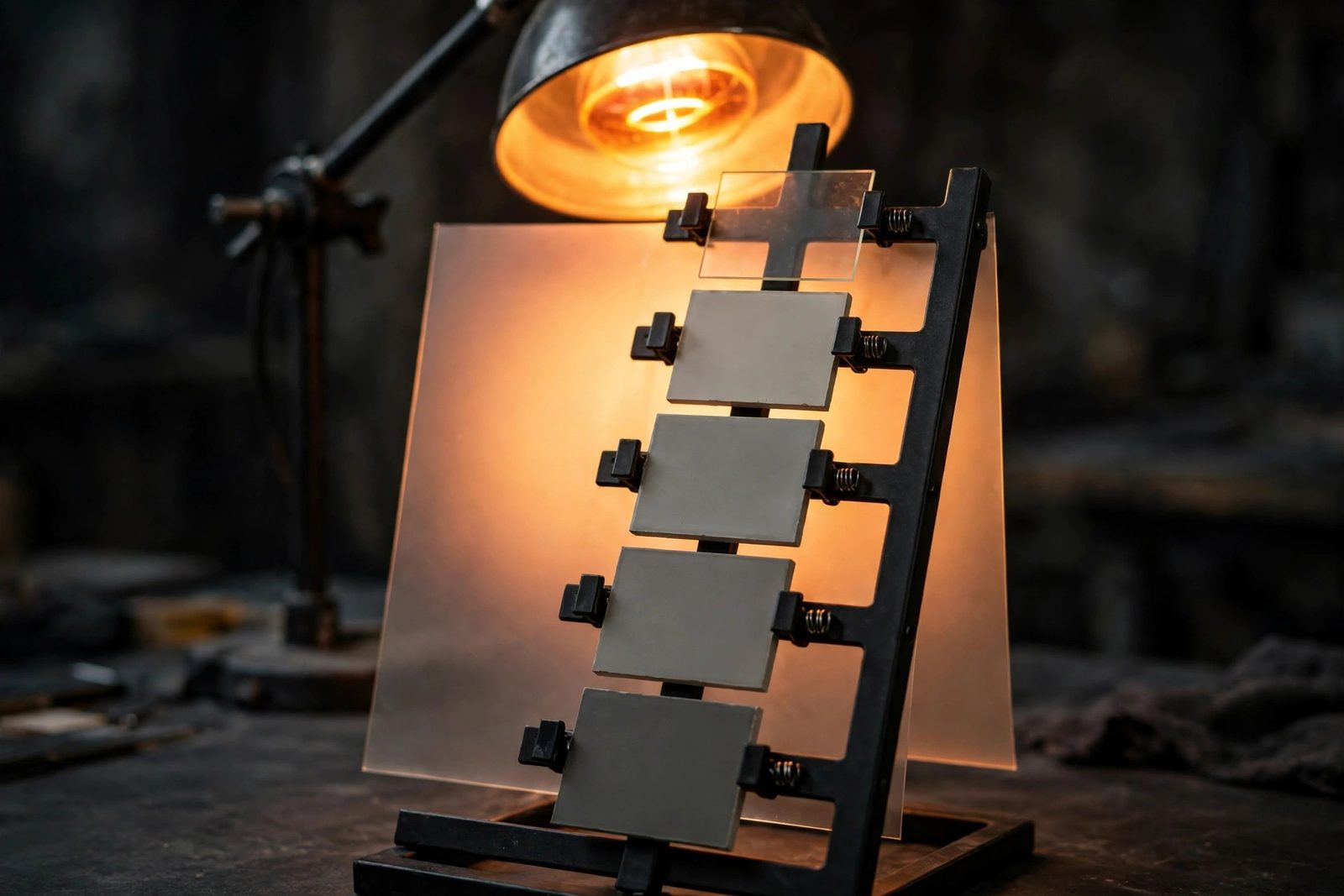
The ceramic vs carbon window tint question decides most Snellville installs, and the honest answer is about heat, not darkness: ceramic rejects more total solar energy at the same legal shade; carbon delivers most of the comfort for less. Your commute and ownership horizon decide which is right.
The short answer for Snellville drivers and homeowners
Ceramic wins on heat: TSER reaches the low 60s percent, flagship multi-layer ceramic near 71%. Carbon lands around 40–55%. Both block about 99% of UV; neither interferes with phone, GPS, or key-fob signals.
Carbon wins on price: $299–$449 for a full car against ceramic at $449–$699 (October 2026 guide ranges). Both are color-stable and never turn purple like dyed film.
Short answer: ceramic for maximum heat control in a legal shade, carbon for value per dollar. Below are the numbers we use at the counter — including where carbon is genuinely enough.
How ceramic and carbon film actually block heat
Carbon particles embedded in the film absorb solar energy and create its matte, color-stable finish. Absorbed energy still warms the glass, which is why carbon’s TSER plateaus mid-range.
Ceramic nanoparticles reject infrared — the part of sunlight you feel as heat — while letting visible light through. That selectivity lets a lighter ceramic shade out-reject a darker carbon shade.
Judge both by TSER. Infrared percentages are measured differently by every maker and cannot be compared across films; TSER can. “98% heat rejection” is an infrared marketing figure, not heat.
Which window tint blocks more heat in Snellville Georgia?
Ceramic, at every comparable shade — and the gap widens exactly where Snellville drivers sit: slow traffic, school lines, and sun-baked lots off Scenic Highway, where airflow does nothing.
The comparison we walk through at the counter:
- Heat (TSER): ceramic low-60s %, flagship near 71%; carbon 40–55%
- UV protection: both around 99% — a tie
- Color stability: both stable; neither fades purple
- Signal interference: none from either — no metal
- Glare: carbon’s matte finish slightly softer; ceramic clearer at night
- Lifespan: both long; ceramic holds its numbers longest
Darkness is absent on purpose: a 50% ceramic can feel cooler than a 20% carbon, because VLT measures visible light, not heat.
Legality frames the choice — Georgia fronts must meter at 28% VLT or lighter under HB 1161, so “go darker in carbon” is not a strategy. See our Georgia tint law guide.
Ceramic vs carbon window tint cost in Snellville
October 2026 guide ranges for a full car in Snellville:
By tier:
- Dyed: $199–$299 — the baseline both films beat
- Carbon: $299–$449 — the value tier
- Ceramic: $449–$699 — the heat tier
- Flagship ceramic: $599–$899 — maximum TSER
- Two front windows: $129–$249 in either film
Per summer, the ceramic premium is small: roughly $150–$250 over carbon, spread across years of color-stable life, for a cabin that stabilizes cooler after every parked afternoon.
Full tables: our pricing page, plus the ceramic window tint and carbon window tint pages.
Real-world performance through a Snellville summer
In a Snellville July, both films transform a car versus bare glass. The difference arrives in the second ten minutes: ceramic cabins stabilize cooler because less infrared keeps entering as you drive.
Carbon is genuinely sufficient for garaged cars, short commutes, and rear windows behind the driver, where multipurpose vehicles may run darker shades legally.
Ceramic earns its premium for west-facing commutes, driveway parking, glass-roof EVs, and kids or dogs in the back seat — the cases in our guide to keeping your car cool without leaning on AC.
Homes follow the same logic at $5–15 per square foot: standard solar films suit mild exposures; ceramic earns its cost on west-facing glass baking from 3 PM onward.
Common mistakes we see on Snellville tint jobs
The costliest mistake is comparing films by infrared percentages or darkness. The second is assuming a cheap quote and a ceramic quote describe the same product.
Other mistakes we fix regularly:
- Buying “ceramic” by name only — demand the TSER figure in writing
- Going darker instead of better — dark fronts are illegal in Georgia anyway
- Mixing tiers blindly — dyed rears purple while ceramic fronts stay new
- Ignoring the meter — installed fronts must read 28% VLT or lighter, glass included
- Judging under shop lights — film proves itself at 4 PM on Highway 78, not indoors
Already fading? Read why tint turns purple before layering anything new over it.
When to call a professional
Call when you want both films quoted on your actual vehicle, with TSER figures and metered-VLT documentation in writing — the only fair comparison.
At O2 Window Tinting, 3304 Stone Mountain Hwy, owner Octavius Tolbert walks you through samples on glass, not charts. Open Monday–Friday 9 AM–6 PM, Saturday 9 AM–5 PM; call (770) 674-2766.
Frequently Asked Questions
Is ceramic or carbon tint better for Snellville heat?
Ceramic. Its TSER reaches the low 60s percent — flagship near 71% — against carbon at roughly 40–55%. Both block about 99% of UV and neither affects signals. Carbon is the better value; ceramic is the better heat tool.
Does carbon tint block heat as well as ceramic?
Not quite. Carbon absorbs solar energy well and feels far cooler than dyed film, but absorbed energy warms the glass itself. Ceramic rejects more infrared before it becomes cabin heat, so its TSER runs higher at the same shade.
How much more does ceramic cost than carbon in Snellville?
Full car, October 2026 guide ranges: ceramic $449–$699 against carbon $299–$449 — roughly a $150–$250 premium. Two front windows run $129–$249 in either film. Across the film's color-stable life, the gap is a few dollars a month.
Will ceramic tint interfere with my phone or GPS?
No. Ceramic film contains no metal, so phones, GPS, key fobs, and toll transponders work normally. Carbon is signal-safe too. Older metalized film is the type that can interfere — one reason it has largely been replaced.
What is TSER and why does it matter more than darkness?
TSER — total solar energy rejected — is the share of solar energy filmed glass turns away, and the only heat figure comparable across films. Darkness (VLT) measures visible light only, so a lighter high-TSER ceramic beats a darker low-TSER film.
Get help with window tinting in Snellville
Start with car window tinting in Snellville and the pricing tables, or call O2 Window Tinting at (770) 674-2766 for an itemized quote in both films.